
De Hirsh Margules, Mother Ann Lighthouse, Eastern Point, Gloucester, 1946. Gouache on paper. Gift of Jean M. Horblit, 2002. [Acc. #2002.004.002]
WBUR: Abandoned for nearly 200 years, Gloucester’s Dogtown continues to fascinate
By Amanda Beland | November 19, 2026
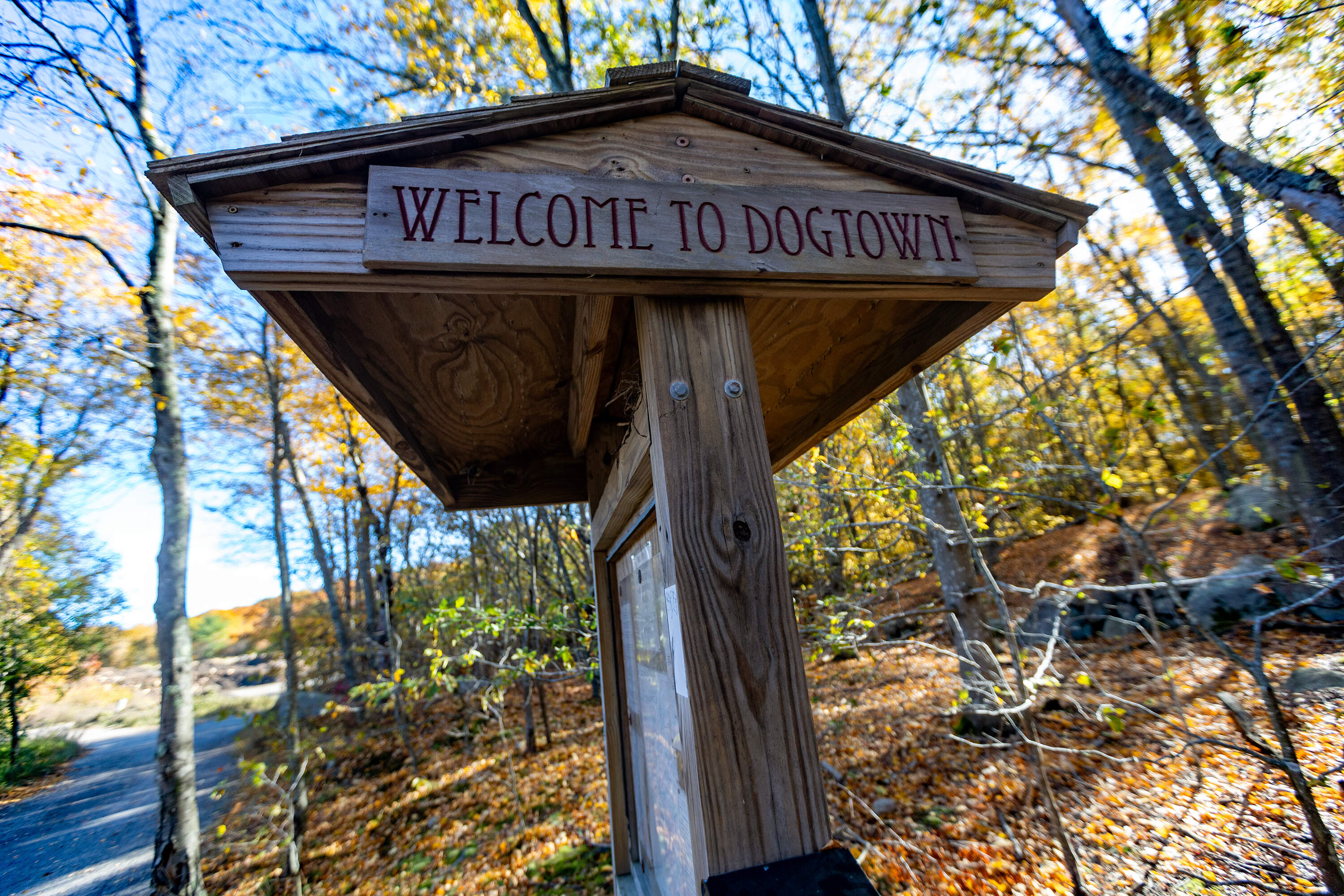
A couple miles outside of Gloucester’s downtown is a place that’s fascinated people for generations.
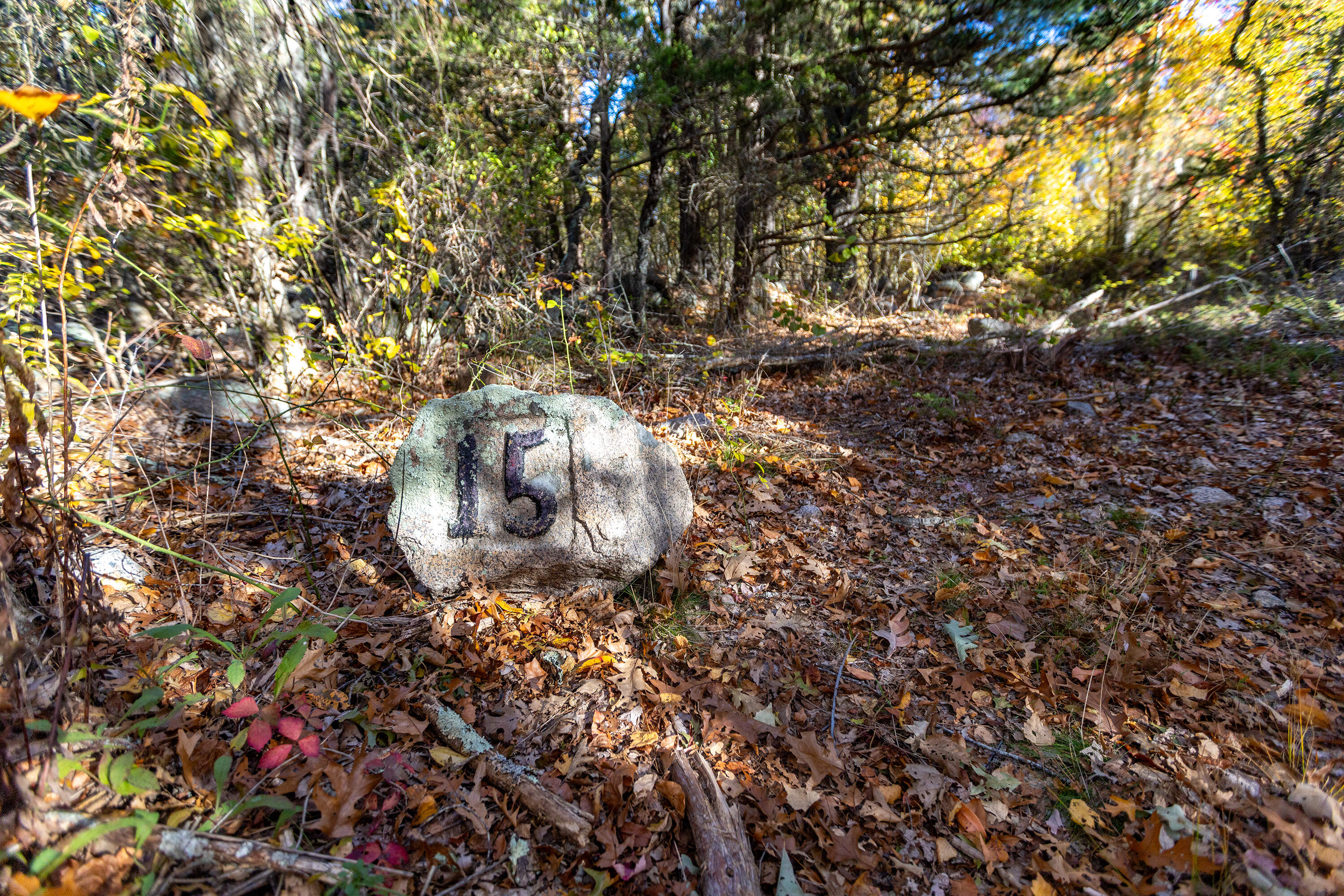
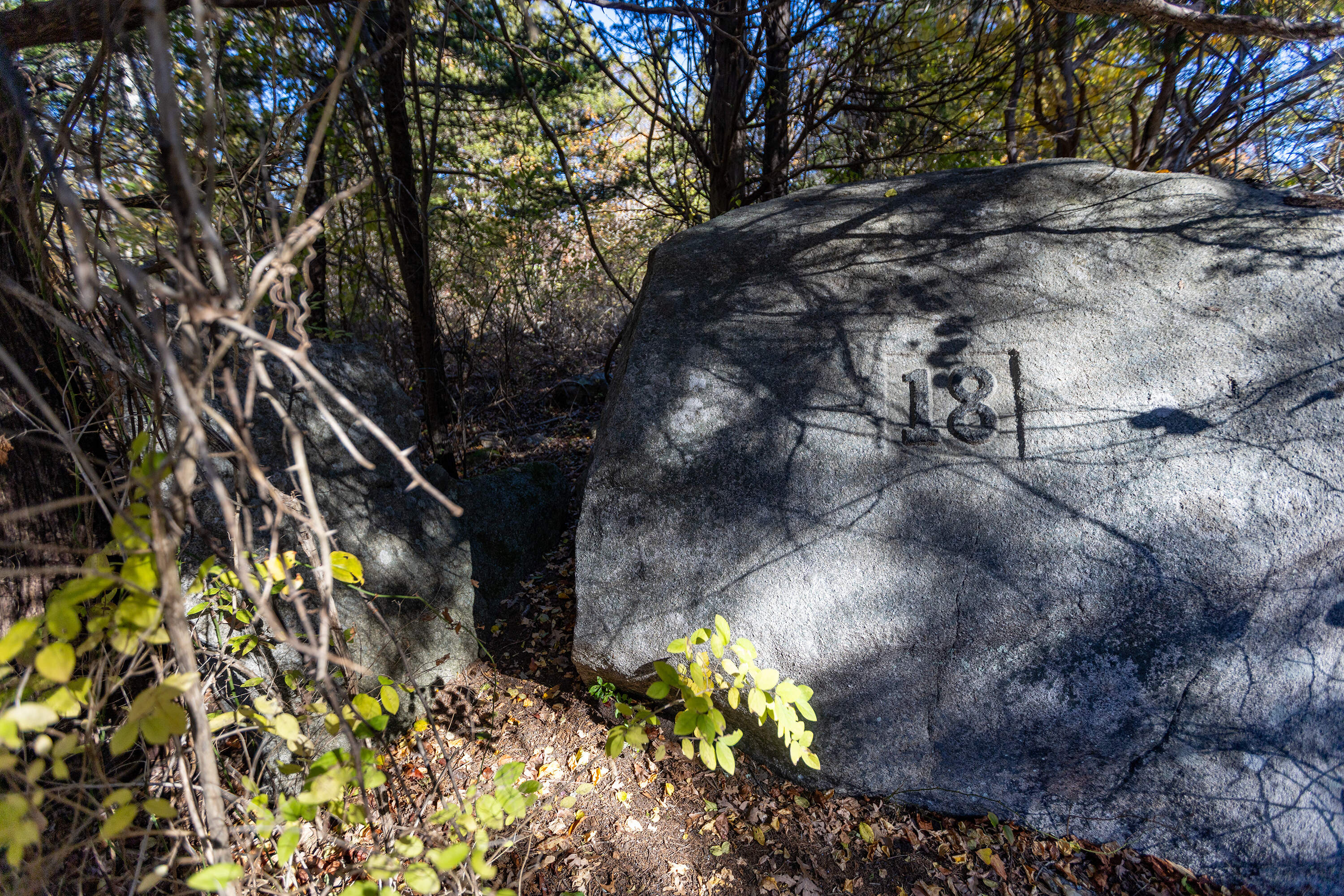
It’s a wooded area, with winding trails that cut through thick patches of trees and bushes, with hundreds of boulders — some with mysterious messages — peppering the ground. Tucked in the thicket are cellar holes, overgrown and abandoned, each marked with a stone and a number.
Gloucester resident Jenn Brooks is among the descendants of this ghost town called Dogtown. Her ninth great-grandfather lived here. She said his daughter ran a school house in town, and a nearby swamp bears the name of her ancestor, Jane ‘Granny’ Day. Brooks said she likes to think about the people who once walked these paths she walks nearly every day.
“I wouldn’t say I view it as a spooky place,” she said. “I do think that every place has energy, this place included.”
The former settlement has a colorful history that’s long drawn visitors, including historians, poets and painters, curious about how the woods and its features came to be.
Revolutionary past
The lore surrounding Dogtown is a mix of fact, legend and stories that lay in between.
“It’s one of these places that I don’t think we’ll ever get it quite right,” said Mark Carlotto, local author and researcher.
Carlotto, who lives near Dogtown, has done extensive mapping of the cellars and trails around them. He’s also combed through genealogy records to plot who lived where, and build a timeline of when.
“I think it’s important to sort of understand the difference between what we know, what we don’t know, what the theories are, the speculation,” he said. “I think that’s sort of fertile ground for historical research.”
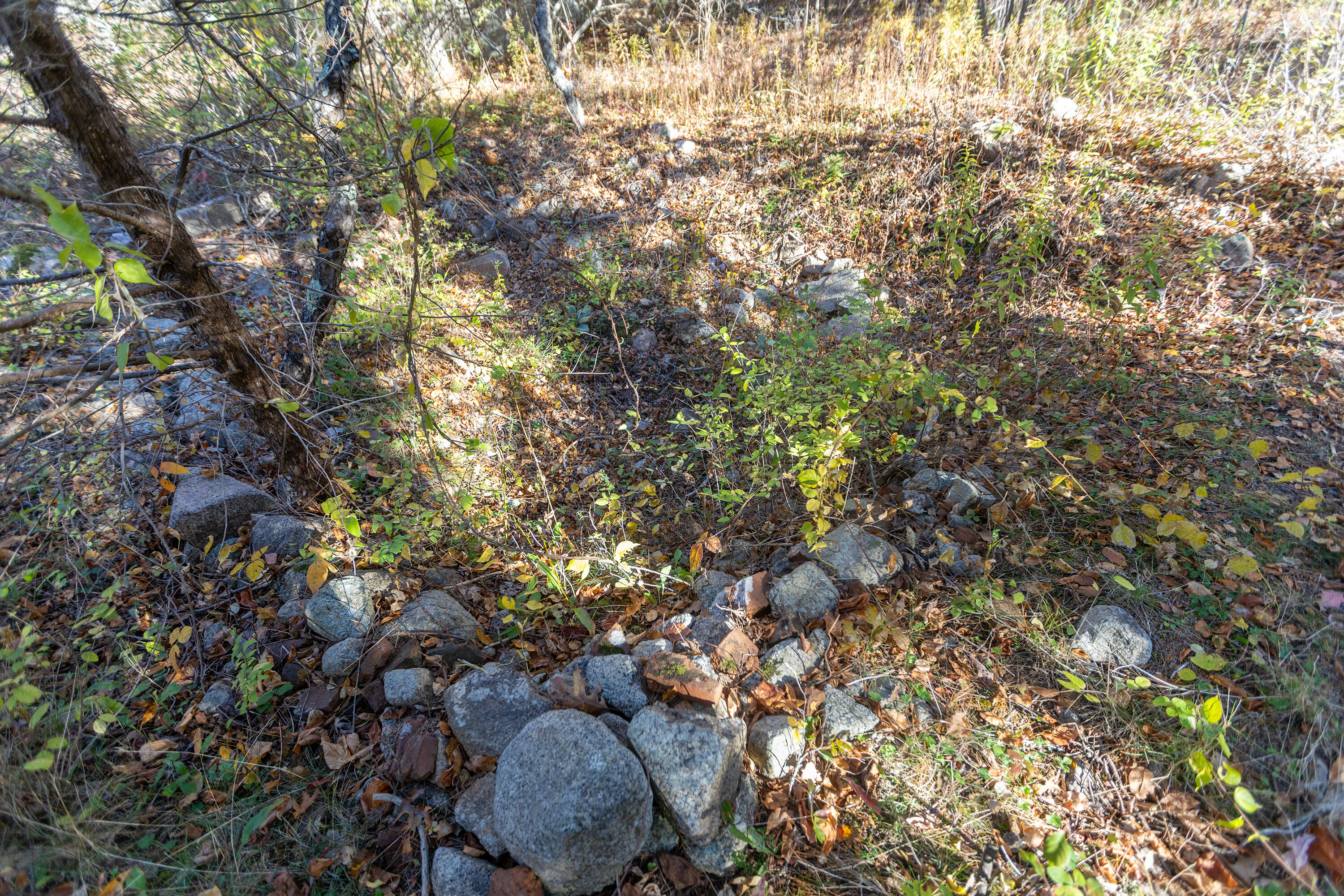
For generations, the land was used and stewarded by local Indigenous communities. In the colonial era, colonists cut down trees from the land in service of the region’s booming lumber industry. The newly cleared land gave Gloucester residents more space to live and work on.
“There was a rule that if you were a Gloucester resident, you were able to get a piece of land,” said Julie Travers, local history librarian at Gloucester’s Sawyer Free Library. “So a lot of people took advantage of that and lived here.”
But that changed during the American Revolution. Gloucester lost hundreds of people in the war, and many women were left widowed. Around the same time, Gloucester’s main economic industry shifted from lumber to fishing and activities closer to the ocean, Travers said.
A place for the marginalized
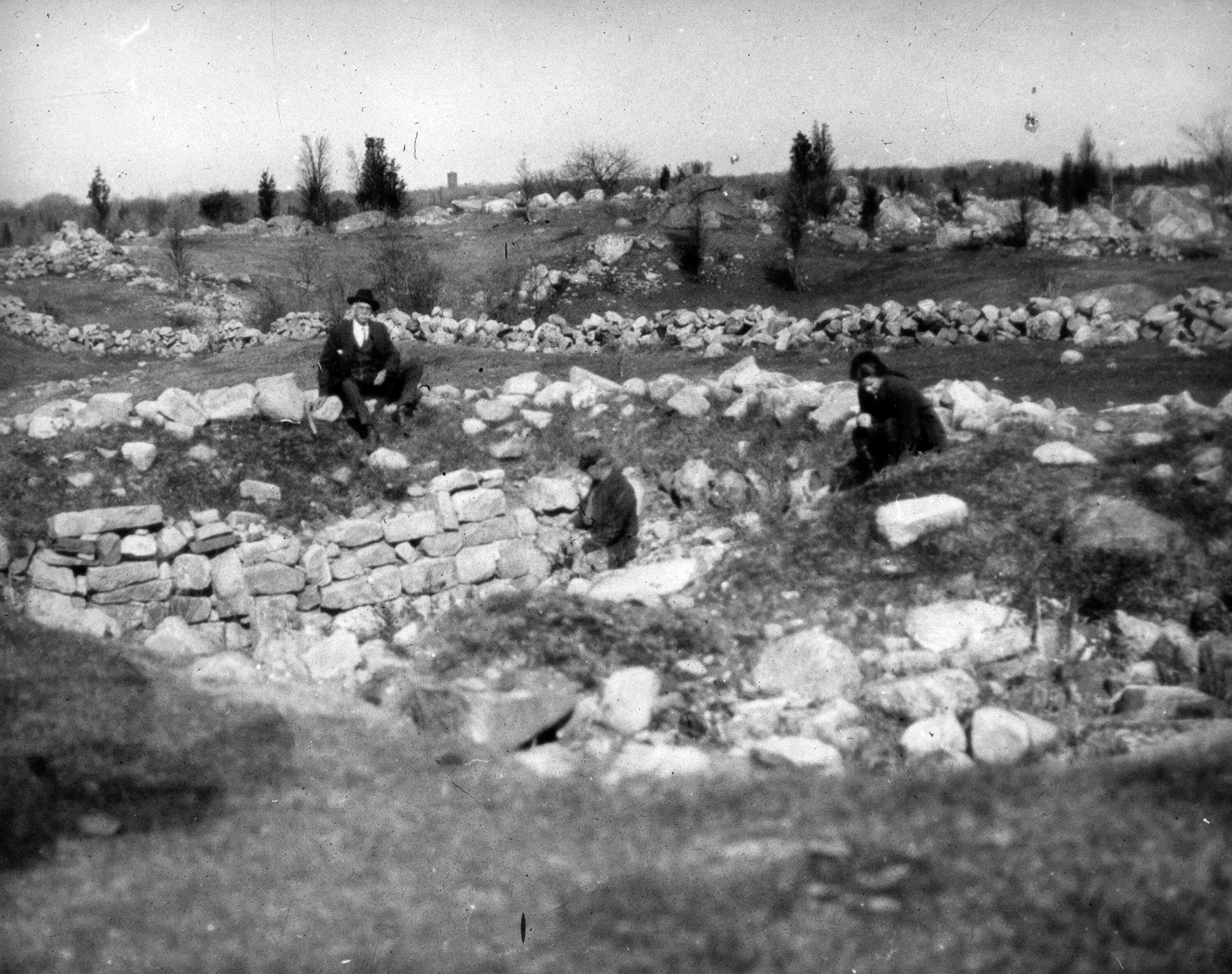
As families moved out, they either abandoned their homes or rented them out. Some widows stayed.
“There really weren’t many respectable ways for women to make a living,” said Monica Lawton, a longtime Cape Ann Museum guide who leads hikes around Dogtown. “So if you were widowed or you were poor to begin with, you had limited options … they did the best they could.”
This is also the time where many believe the name “Dogtown” comes from.
“There were a lot of women left without their husbands and they had dogs, and so the dogs protected them,” said Carlotto. “They started roaming around and, you know, got that kind of name.”
Some of the people who moved in were reportedly poor, formerly enslaved or living on the margins of society.
Much of the local legend of Dogtown stems from Gloucester Times reporter Charles Mann, who wrote about the area after it was deserted by 1830. He spoke with family members and surviving neighbors, compiling their stories in a book. While insightful, some of the stories are regarded by experts on Dogtown as potentially inflated or hearsay.
“It’s really given Dogtown its color, and I think contributed a great deal to its sort of enduring quality,” said Carlotto.
One such character was Thomasine “Tammy” Younger, known today in some legends as the “Queen of the Witches.” Mann wrote about claims of card games and fortune telling at Younger’s home, which were considered unsavory activities at the time. She lived alone on top of a hill at the entrance of the village, and, according to Mann’s book, would harass people who walked by.
“Tammy had a square window in the rear of her house, with a wooden door,” Mann wrote in 1896. “The sound of a team crossing the bridge over the brook was usually a signal for Tammy to swing open the shutter and boldly communicate with the driver.”
Or a resident called “Old Ruth.” Mann described her as a formerly enslaved person who dressed in men’s clothing and did “a man’s work.” Sometimes going by the name “John Woodman,” Mann postulated that maybe she was “the original ‘new woman.’ ”
Mann’s writing and others like it inspired New England author James Scrimgeour to write a book of poems about Dogtown. Scrimgeour said the people who lived there “created a world of their own,” separating their smaller community from the “regular” life of Gloucester at the time.
“I was interested in that, in the life that they had and how it was different,” he said.
Scrimgeour wrote a poem called “Old Ruth,” and said she was mentioned in nearly every source he referenced in his research.
“It was only when she went to the poorhouse to spend her last days that she began to wear a skirt, and that was by compulsion, not by her choice,” Scrimgeour wrote. “Sad, so sad, the compulsive ways in which we spend our last days.”
‘The rune of the nation’
Over the years, the ghost town has attracted even more creatives, said Lucas Cotterman, co-owner of Dogtown Books in Gloucester. Cotterman and his partner, Caroline Harvey, took over the used bookstore in 2018 and have spent the past few years learning about the settlement.
“Because people went there to sort of escape society in a way, there’s not a lot of record of things,” said Cotterman. “The line is blurred between what’s historical fact and what isn’t. So that’s why some people — some writers, some painters — they take artistic license with it.
“They sort of make it their own thing,” he said, “because it’s almost a blank canvas.”
Like poet Charles Olson, who wrote in his thousand-plus-page opus “The Maximus Poems” that Dogtown is “the rune of the nation,” meaning there’s so much to discover about it. Olson’s visits to the forest reportedly renewed his “poetic energy,” said Lawton, the Cape Ann Museum guide.
Henry David Thoreau even walked through Dogtown on a journey through Cape Ann, writing it “was the most peculiar scenery of the Cape.”
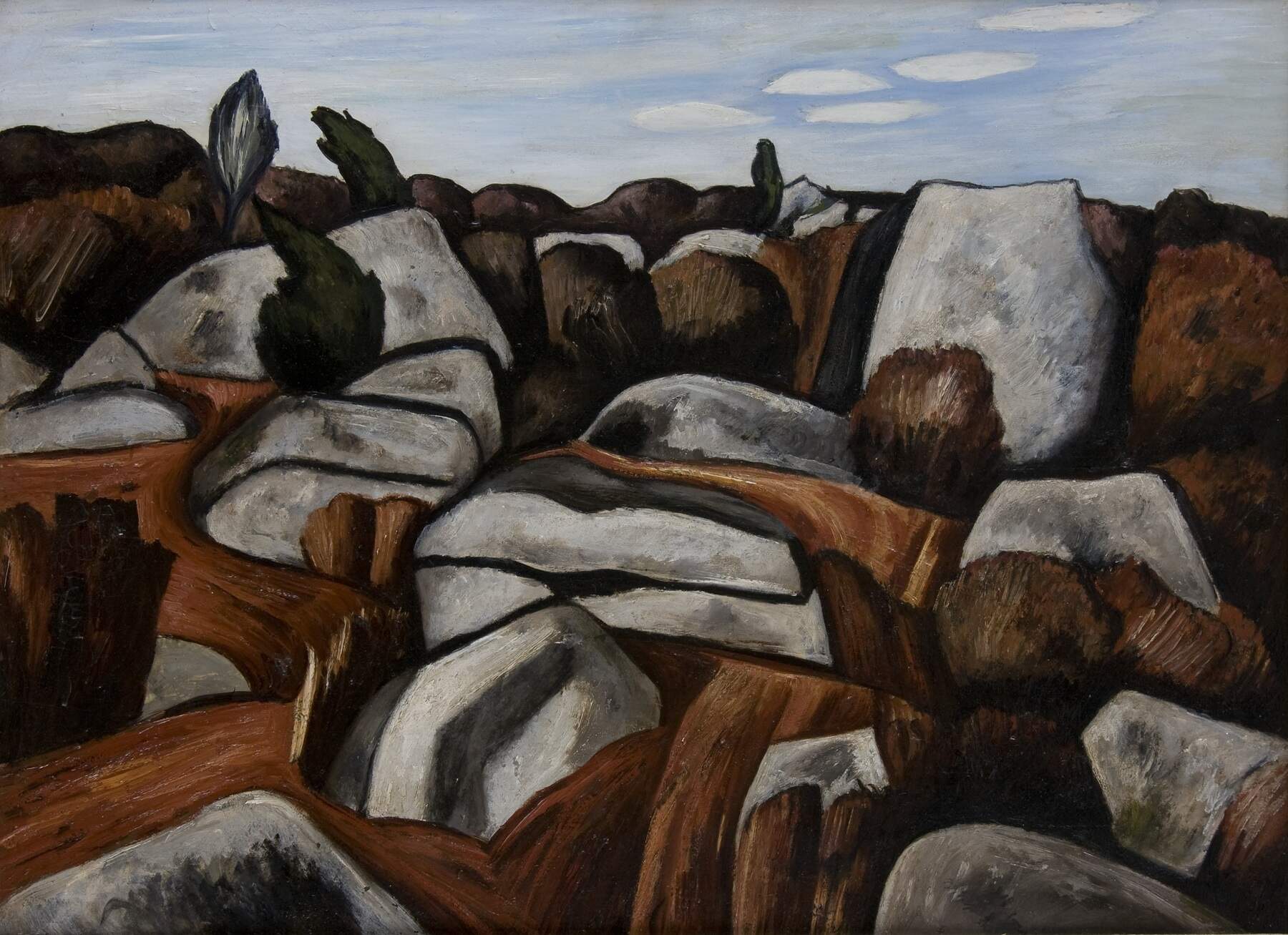
Over the decades, acclaimed painters like Marsden Hartley and John Sloane also drew inspiration from the former settlement. Sloane, said Lawton, felt “creatively unshackled” in a place like Dogtown, where boulders dot the overgrown landscape.
Modern obsession
At the turn of the 19th century, fewer and fewer people were living in Dogtown. Some had moved away and others died. Some of the houses were in disrepair.
The last Dogtown resident, a Black man named Cornelius Finson, also known as “Black Neil,” was removed by the city by 1830 and sent to what was then called the “poorhouse.” Carlotto said he was removed so he didn’t freeze to death in the dropping New England temperatures. He reportedly died a few years later.
Since then, the landscape has been taken back by the forest. Only cellars remain of the houses that once stood there.
Each structure is marked with a number carved on a boulder nearby. The numbers, along with inspirational sayings, were etched around the time of the Great Depression by quarry laborers who needed jobs. They were hired by 10th generation Gloucester resident Roger Babson when he briefly owned a portion of the land.
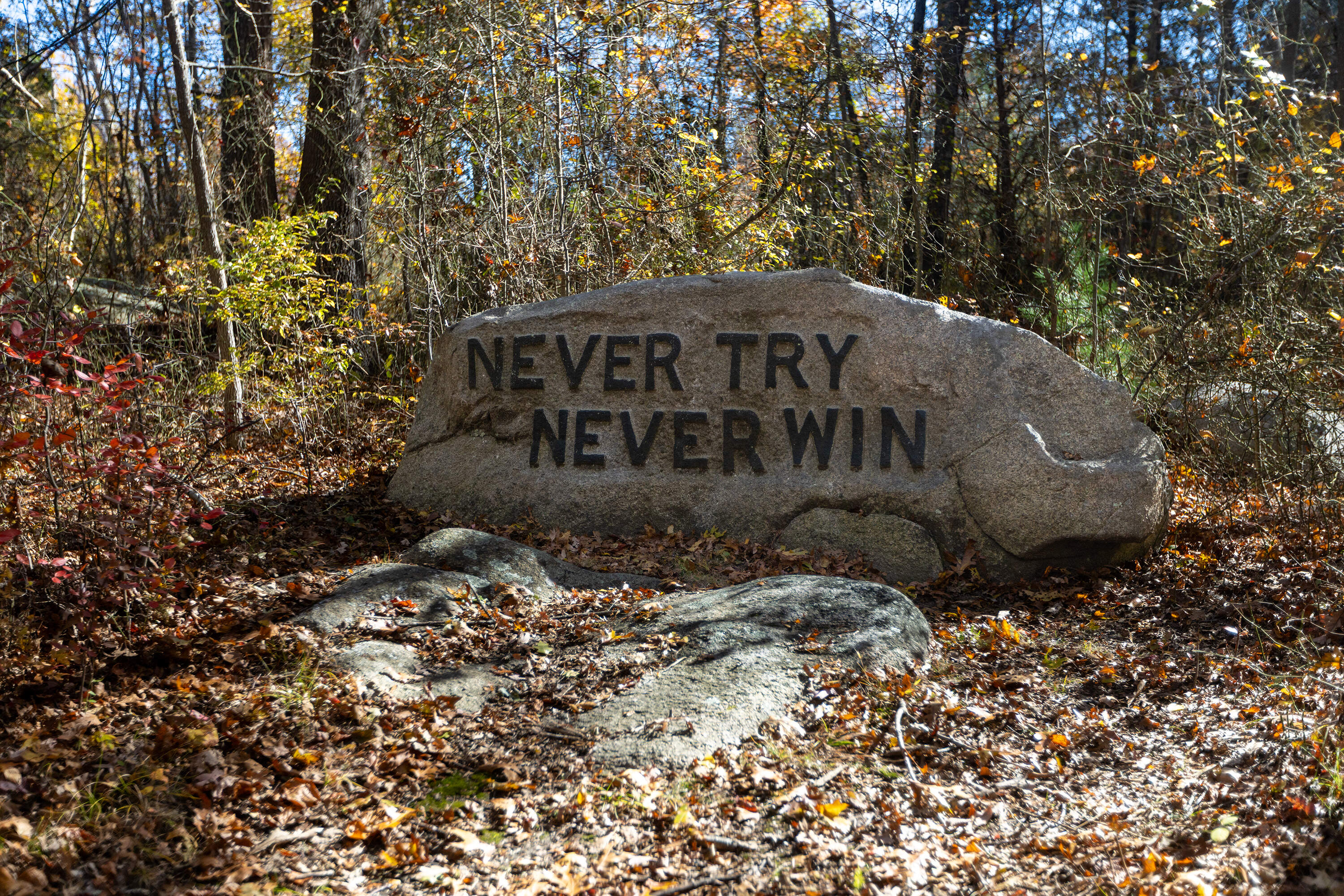
Today, Dogtown is managed by Gloucester’s Open Space committee. There were efforts just under a decade ago to get the area listed on the National Register of Historic Places, but the city ultimately chose to retain control. It’s now a mix of maintained trails and overgrown terrain over 5 square miles, open to the public for exploration.
Dogtown’s patchwork history has spawned legends about the land of ghosts and witches. But for Caroline Harvey, co-owner of the bookstore bearing its name and fourth-generation resident of Gloucester, the land and its past hold truths far more important than the spooky scenery that’s left.
“I think what adds a level of intensity to carrying the name ‘Dogtown Books’ is that it was a sanctuary for so many marginalized people,” Harvey said. “What we’re also trying to do is create a sense of being a safer place, knowing that the world is not always a safe place.”
To read the full article, click here.
