Cape Ann Museum, Cape Anncestry and the Fiesta 100 Photo Committee is asking anyone with past St. Peter’s Fiesta photos to share them for an exhibition at next year’s fiesta, which will be the 100th anniversary of the event.
“Fiesta 100: A Community Photo Album” is an exhibition that will be on display during next year’s fiesta at a location to be announced later and accompanied by a Cape Ann Museum exhibit exploring the cultural significance of one of Gloucester’s signature events.
Photo submissions are being accepted now through Dec. 31 and high-resolution digital images can be emailed to [email protected].
Anyone with physical images can get them scanned for free by museum staff Saturday, Oct. 24, from 9-10 a.m. at the Janet and William Ellery James Center, 13 Poplar St. Original images will be returned after they are scanned.
People submitting images are also asked to provide as much context to their images as possible such as approximate year, location and names of people photographed and lending families.
Leading the project is James Palmisano and James Burnham, both of whom played significant roles in the 1992 fiesta photographic display.
The 1992 display was similar to this year’s effort, they collected over 600 old fiesta photos and put them on display and the two are bringing it back to celebrate the 100th anniversary.
Bunrham said any images they collect for next year’s fiesta will be added to the 1992 collection but they haven’t collected any images since then.
“It’s an exhibit that needs to be looked at again to show the heritage of the feast and the people involved in it over the years,” Burnham said.
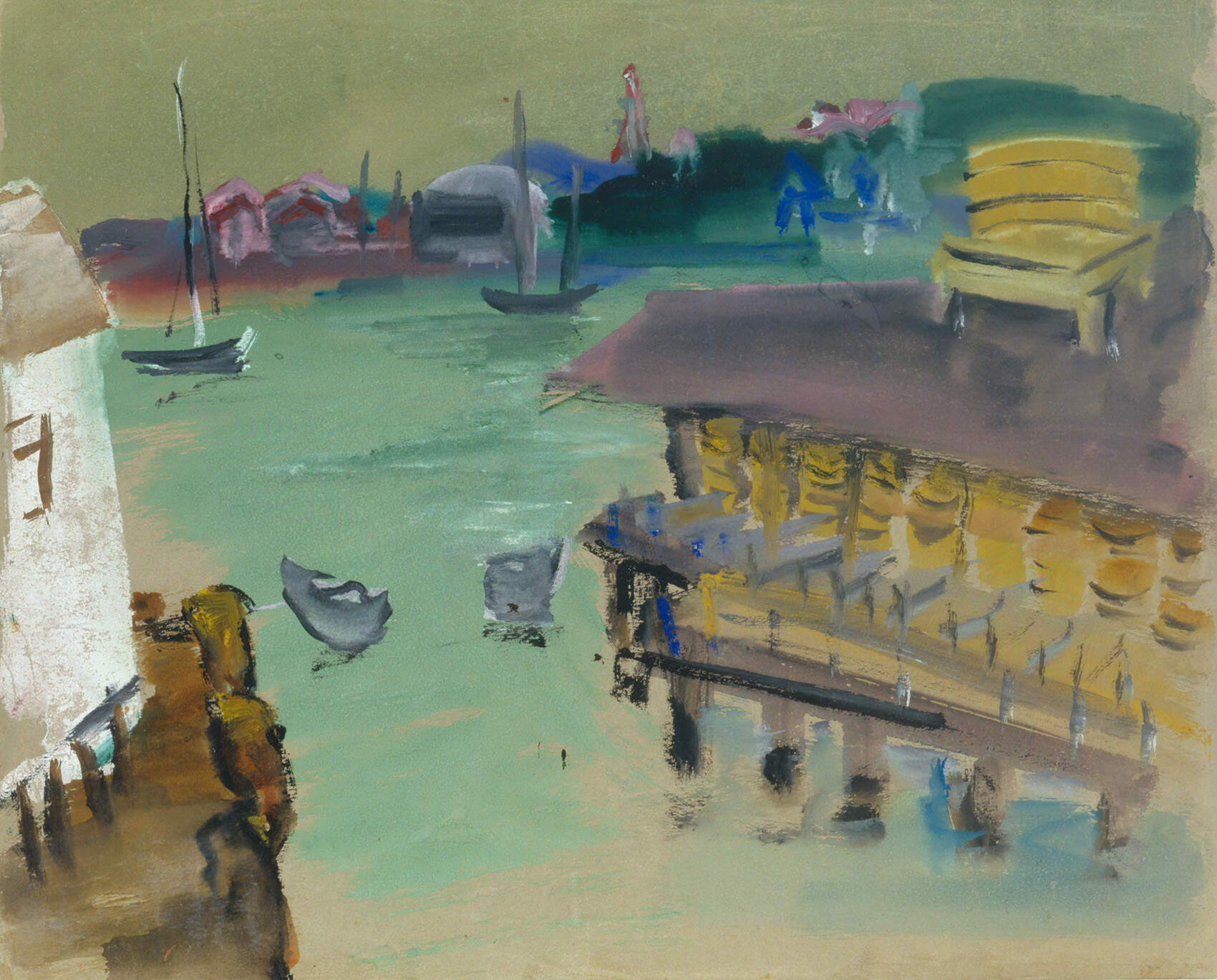
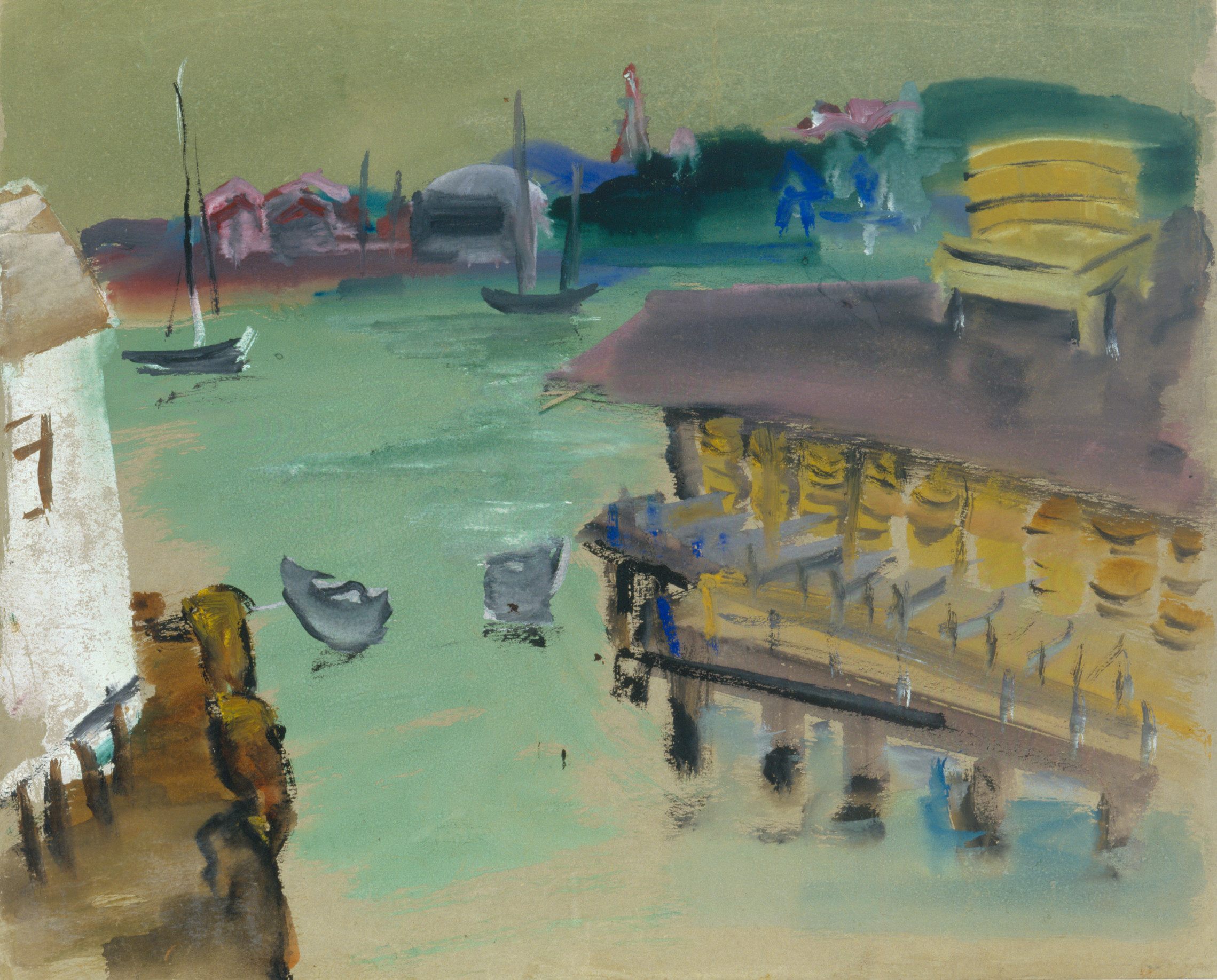
This untitled 1934 watercolor by Mark Rothko of Gloucester Harbor has been donated by the artist’s son, Christopher, to the Cape Ann Museum’s permanent collection to mark the final weeks of the museum’s successful “Avery, Gottlieb & Rothko” summer exhibit. On September 27 the exhibit will close and move to Washington, DC. Courtesy Image
As the Cape Ann Museum’s landmark summer exhibition enters its final weeks in Gloucester, one of its signature works is staying behind.
Christopher Rothko, son of artist Mark Rothko, has donated his father’s 1934 watercolor and gouache Untitled (wharf, Gloucester, Massachusetts) to the museum’s permanent collection.
The work, which had been in Christopher Rothko’s personal collection, is currently on view in Avery, Gottlieb & Rothko: By the Sea, which closes Sept. 27.
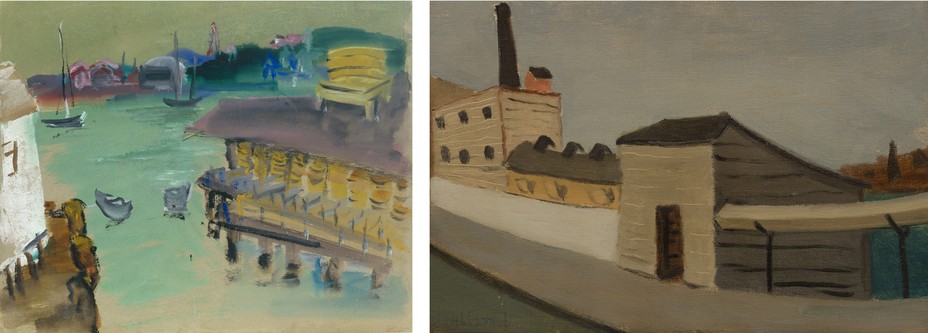
The gift is significant on several levels. It is the first work by Mark Rothko to enter the Cape Ann Museum’s collection, and depicts Gloucester’s Inner Harbor as seen from East Gloucester, including fish flakes on a pier, a wharf structure and the city’s waterfront in the distance.
For Christopher Rothko, the painting’s return to Gloucester was particularly fitting.
“My gift reflects my genuine love for this remarkable town,” Rothko said, adding that the work is now “back home where it will be treasured.”
The donation also underscores the premise behind By the Sea, an exhibition that brings together 82 works tracing the largely overlooked Cape Ann connection among three major figures in 20th-century American art: Milton Avery, Adolph Gottlieb and Rothko. The exhibition includes loans from 26 institutions, including 16 museums around the country.
Avery began visiting Cape Ann in the 1920s and later introduced the younger Gottlieb and Rothko to the area. The three New York artists and friends spent summers here during the 1930s and ’40s, painting together while developing ideas that would carry into their increasingly distinctive styles.
The public response to the exhibition—and to our newly renovated galleries—has been impressive, with 16,500 visitors coming through the museum since it reopened after an extensive renovation on June 30.
Rothko’s Gloucester harbor and beach scenes are particularly revealing because they predate by years the large fields of color for which he would eventually become internationally known. Museum Director Oliver Barker said the exhibition traces an important period in Rothko’s development, when he was working in Gloucester alongside his mentor, Avery, and friend Gottlieb.
“Harbor and beach scenes were central to Rothko’s experience of Cape Ann and to his emerging artistic vision,” Barker said. He called the newly donated painting an important means of helping museum visitors understand “the profound role Cape Ann played in his artistic evolution.”
That local story will soon have a national audience. Following its Sept. 27 close in Gloucester, Avery, Gottlieb & Rothko: By the Sea travels to The Phillips Collection in Washington, D.C., where it opens in October. This marks the first time an exhibition organized by the Cape Ann Museum has traveled to a national museum.
“We are delighted that audiences well beyond the North Shore will have the opportunity to experience the exhibition this fall at the Phillips Collection in Washington, DC,” said Barker. “This partnership marks the first institutional collaboration of its kind in the Cape Ann Museum’s 151-year history and opens the door to a new, dynamic model for collaboration moving forward.”
Before the exhibit leaves for Washington, Christopher Rothko and his sister, Dr. Kate Rothko Prizel, will return to Gloucester Sept. 17 and 18 for a two-day symposium accompanying the exhibition, where they will discuss their father’s development as an artist.
The Rothko arrives during a period of significant growth in CAM’s collection. In 2023, Janet and William “Wilber” Ellery James gave the museum 300 works of Cape Ann American art; apart from that collection, CAM says it has added hundreds of paintings, sculptures, drawings, decorative arts and archival materials in recent years.
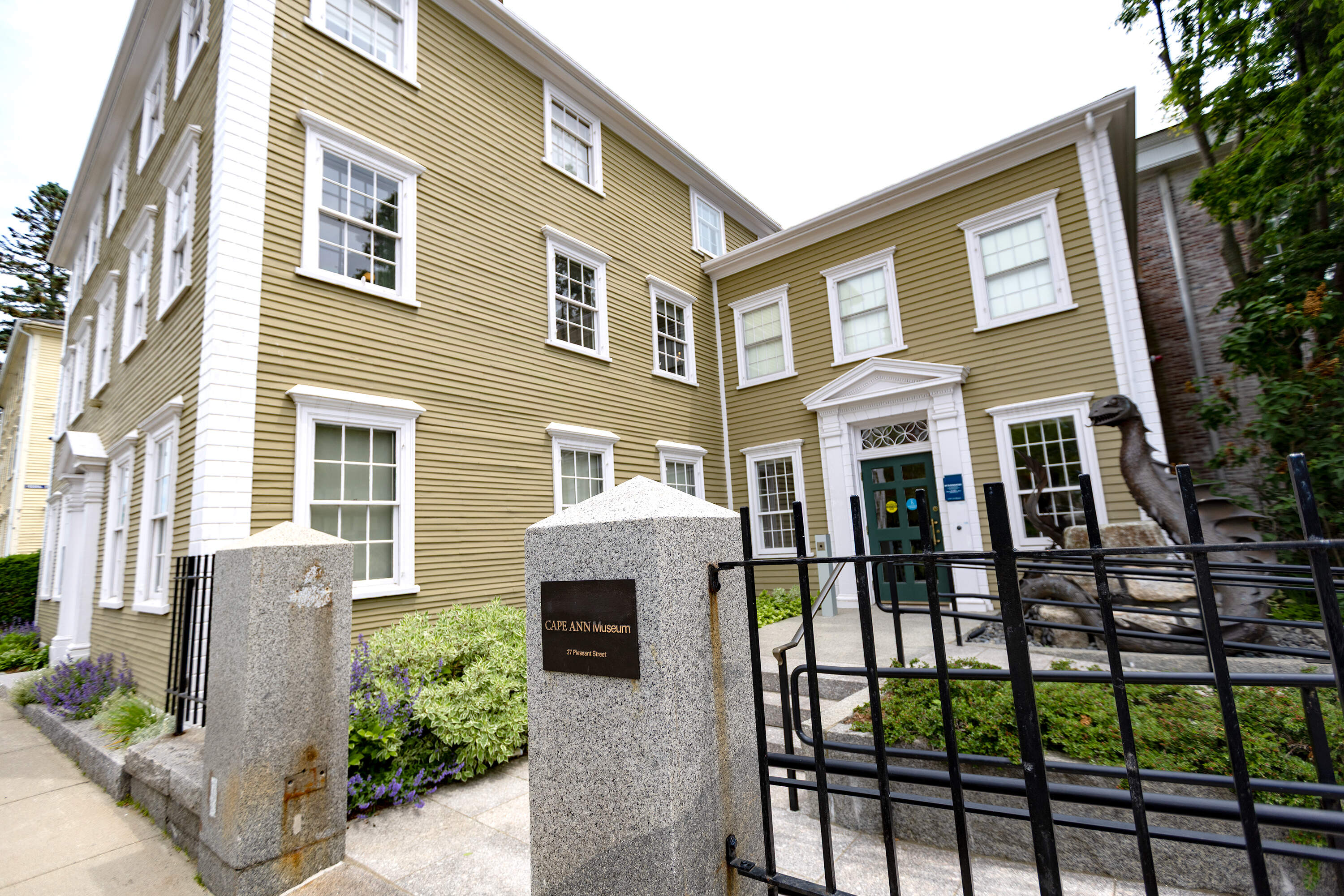
Avery, Gottlieb & Rothko: By the Sea remains on view at the Cape Ann Museum, 27 Pleasant St., Gloucester, through Sept. 27. Timed tickets are required and additional exhibition admission fees apply.
/wp-content/uploads/2023/08/logo.png00Haley Wolfe/wp-content/uploads/2023/08/logo.pngHaley Wolfe2026-09-10 09:14:082026-09-10 09:14:08The Cricket: Rothko Gift Marks Final Weeks of Landmark CAM Exhibition
‘Rothko looked out and saw a landscape, indistinct, misted, veiled and changeable, ever changeable’
By Murray Whyte | September 4, 2026
Mark Rothko, Untitled (wharf, Gloucester, Massachusetts), 1934. • Cape Ann Museum
A little painting by Mark Rothko was recently gifted to the Cape Ann Museum in Gloucester, a gesture of gratitude and appreciation from the artist’s son and keeper of faith, Christopher, for its dazzling summer smash-hit “Avery, Gottlieb & Rothko: By the Sea,” which continues to pack its galleries all the way through Sept. 27. It’s hanging there now, in its little silvery frame; but past that, there’s nothing small about it. In its soft, dissolving stain of watercolor, it’s Gloucester, through and through — a tawny-colored wharf on the harbor, small boats dotting the calm green seas under the soft mist of simmering gray cloud, the headlands of Rocky Neck looming low across the water. But it’s also Rothko — so Rothko, a clear and bracing tease at the vanguard painter he would become, above any other in American art history.
In American art, Rothko is the inevitability: monastic, austere, a high priest of restraint who conjured forth on his big canvases great banks of colored fog that tease at the ineffable. In Houston, works like these fill the Rothko Chapel, so named not for any religious affiliation but for the deep spirituality his works can evoke (three works from that mature period grace a cathedral-like gallery in Gloucester, too). Rothko, for many, has come to transcend the world of art, a mystic whose work offers a glimpse of a realm beyond this earthly plane.
His work is a touchstone, often, not only for what came next, but before. On a recent visit to Tate Britain in London, I saw one of his oblique, beautiful abstractions — soft blocks of mustard, olive, and lavender — hung amid the museum’s spectacular permanent collection of J.M.W. Turner paintings, a master himself of the atmospheric, enigmatic sublime. Together, they felt primal, as mutable and inescapable as weather, and just as captivating (speaking of spiritual communion: I waited and waited, but the couple in the photo simply would not move, drinking it in for half an hour or more. This happens a lot).
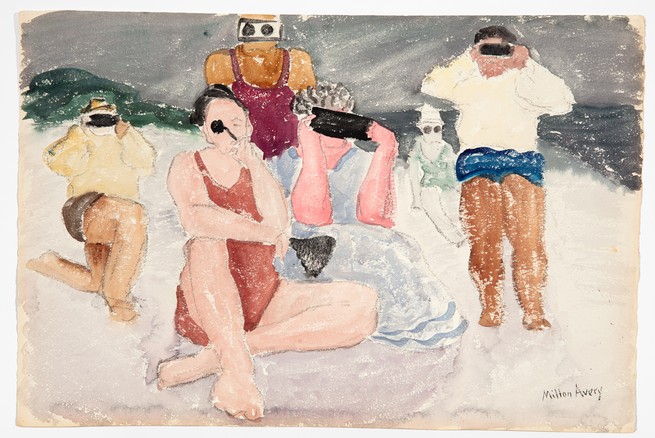
Alongside Turner’s churning seascapes, Rothko’s dusky yellow, his seafoam green, sent my mind from London right back to this very painting. I’d seen it in Gloucester only days before. Holding both in your mind at once, you’re reminded, importantly, that Rothko was at one point an artist much like any other: trying, failing, and trying again to find the visual language that would give his ambitions life in the world. It didn’t come easily, or without trial. As a young painter, he adored Henri Matisse, though the loose, expressive but still embodying figuration of the Modern master eluded him; at the Gloucester show, beach scenes daubed in watery hues feature disproportionate blobs of flesh, void of finicky bits like faces and hands (not, he’d admit, his strength).
Mark Rothko, Untitled (bathers on the beach), 1934. Kate Rothko Prizel & Christopher Rothko/Artists Rights Society
Hindsight colors those pictures in rosy admiration: Here he was, forging a path to the misty, billowing blocks that would come to define his oeuvre, and then a generation of American art. Maybe so. But he didn’t do so in solitude. Rothko’s Gloucester experiments took place in the loving embrace of close friendship of his painting confreres Milton Avery, Adolph Gottlieb, and their families; Rothko, so often seen as an inscrutable solipsist, alone in his tower of singular painterly ambition, lived in the fullness of community and familial bliss. At CAM, the painting is hung right now alongside wharf paintings by Avery and Gottlieb, too. The point is clear: Here, he was held up, supported, and loved.
That, I think, is why he was free to push further into the oblique, near-holy realm that he alone reached. Rothkophiles will know he didn’t emerge fully-formed, an intuitive sage manifesting an oblique sublime. He experimented: After Matisse, he turned to Kandinsky, taking inspiration from the Russian avant-gardist’s proto-abstract works to create microbial petri-dish abstractions of hectic scatters of eclectic forms.
Installation view, “Avery, Gottlieb, Rothko: By the Sea,” at the Cape Ann Museum. Steve Rosenthal/Cape Ann Museum
That came after the wharf, the beach, the sea, sand, and sky — a departure, I like to think, before the inevitable return. On that Gloucester wharf, that day, Rothko looked out and saw a landscape, indistinct, misted, veiled and changeable, ever changeable. He saw a world shifting before his eyes, moments escaping, one by one, that he would never fully grasp. What he saw, finally, was his future.
“Avery, Gottlieb, & Rothko: By the Sea” continues at the Cape Ann Museum through Sept. 27.
/wp-content/uploads/2023/08/logo.png00Haley Wolfe/wp-content/uploads/2023/08/logo.pngHaley Wolfe2026-09-04 15:44:532026-09-04 15:45:30Boston Globe: In this early Rothko, we glimpse an artist embraced by friendships that helped him learn his own ethereal language
The usual story is that Milton Avery mentored, then was eclipsed by, the famed abstract expressionist. But it was more complicated than that.
By Sebastian Smee | August 27, 2026
The painter Milton Avery (Arnold Newman Properties / Getty)
The evolution of European modern art can be explained as a story of susceptible young people falling under others’ spells and then asking, What can I do with this? How can I convert it to my purposes?
What’s remarkable is how often the main chapters of this story have unfolded in coastal or mountain retreats. Think of Claude Monet on the Normandy coast, wrestling with the influence of his mentor Eugène Boudin. Or Henri Matisse staying in Saint-Tropez with his mentor Paul Signac, before breaking with Signac’s neo-impressionist style and co-inventing fauvism. Or Pablo Picasso, goaded into radicalism by the latest bizarre creations of Matisse, retreating to the Spanish mountain village of Gósol and, mere months later, beginning work on his proto-cubist masterpiece, Les Demoiselles d’Avignon. All of these key episodes happened in agreeable resorts, seaside ports, and villages, far from the sophisticated cities assumed to have been the cauldrons of modernism.
Modern art in America is no different. Its story can scarcely be told without reference to artists summering on the Atlantic Coast, including Winslow Homer, Marsden Hartley, and Edward Hopper in Maine and Massachusetts and Jackson Pollock, Lee Krasner, and Willem de Kooning on Long Island.
Beginning in the early 1930s, three Americans—Milton Avery, Mark Rothko, and Adolph Gottlieb—began spending summers together on Cape Ann, along the coast of northeast Massachusetts. They loved the gritty authenticity of Gloucester, the nation’s oldest fishing port. Cape Ann’s distinctive, undulant geography combined pungent industry and village intensity with Atlantic immensity of sea and sky. The story of the relationships among these artists, in particular between the older Avery and the now–stratospherically famous Rothko, shows us American modernism in its moment of greatest transition.
Avery was the mentor figure, the one destined, in the usual telling of this story, to be eclipsed. Whereas Rothko is a regular subject of museum retrospectives in Europe and North America, and his paintings can sell at auction for as much as $98 million, Avery remains relatively unknown outside of the U.S. (The most expensive Avery sold at auction was a little more than $6 million, in 2022.) But are we telling the right story about Avery if we cast him in this role?
Certainly, when Rothko and Gottlieb, during World War II, turned to abstraction, they broke from Avery and, in short order, became central figures in a mid-century revolution—one that transformed modern art from a marginal activity to a cultural phenomenon attracting cash, prestige, and international acclaim. Avery wasn’t exactly forgotten in all of this, but he has long been overlooked.
He had first come to Gloucester in 1920, returning regularly during the summer until 1945. It’s where he met his wife, a fellow artist named Sally Michel. The fishing port was known as a bustling artists’ colony. In the 19th century, Homer and Fitz Henry Lane had spent productive time there, as had Hopper, Cecilia Beaux, and Stuart Davis in the 20th. So Avery was far from alone as he strolled around the harbor with his sketchbook and retired at night to rudimentary rooms lacking toilets and bathtubs. In 1932, he and Sally, who was pregnant with their only child, were joined on Cape Ann by Rothko—at the time called Markus Rothkowitz; he began using the name Mark Rothko in 1940—and Gottlieb.
Avery was in his element in Gloucester. Confident, good-humored, and in the noontime of life, he sat comfortably on his own shadow. Unlike his protégés, he was not especially intellectual. He was a taciturn pragmatist with a gentle sense of humor. He had a dog called Picasso. To those who said modern art was ugly and hard to appreciate, he would answer: “Olives taste ugly, too, until you learn to enjoy them.”
The two younger men felt his support, but he didn’t force his ideas on them. According to Eliza Rathbone, the curator of an exhibit about the trio’s seaside summers currently on view at the Cape Ann Museum, Avery “never uttered a word of advice or instruction to any painter other than ‘do another one.’” He set an example: how to be a modern artist, yes. But also: how to be a husband and father, how to carry on. His very reticence was liberating.
The three men had become friends in New York, where they would gather in the evenings to sketch and discuss art at the Averys’ Lincoln Square apartment. “I cannot tell you what it meant for us during those early years to be made welcome in those memorable studios,” Rothko would later recall.
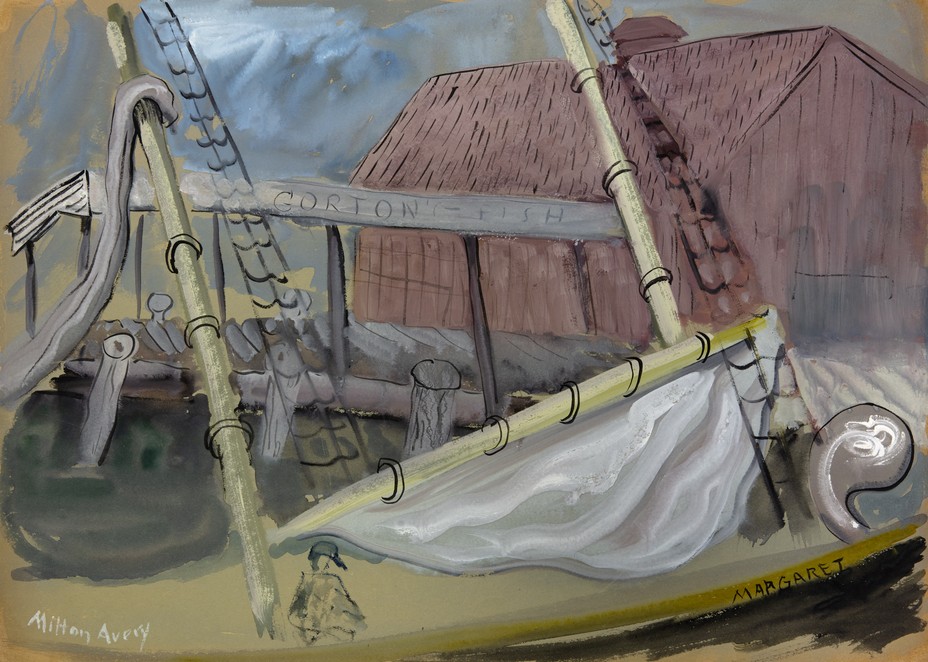
In Gloucester, they explored the port, with its wharves and warehouses and fish-processing facilities, filling sketchbooks and painting small-scale works in watercolor. A total solar eclipse that August provided fodder for Avery, who made an amusing watercolor showing people on Good Harbor Beach looking at the celestial phenomenon through smoked glasses and colored film.
That first summer together was bookended by major life events back in New York. The Depression had flooded the streets with the unemployed. Gottlieb married in June. In October, as memories of summer receded, Sally gave birth to a daughter, and a few weeks later, Rothko married.
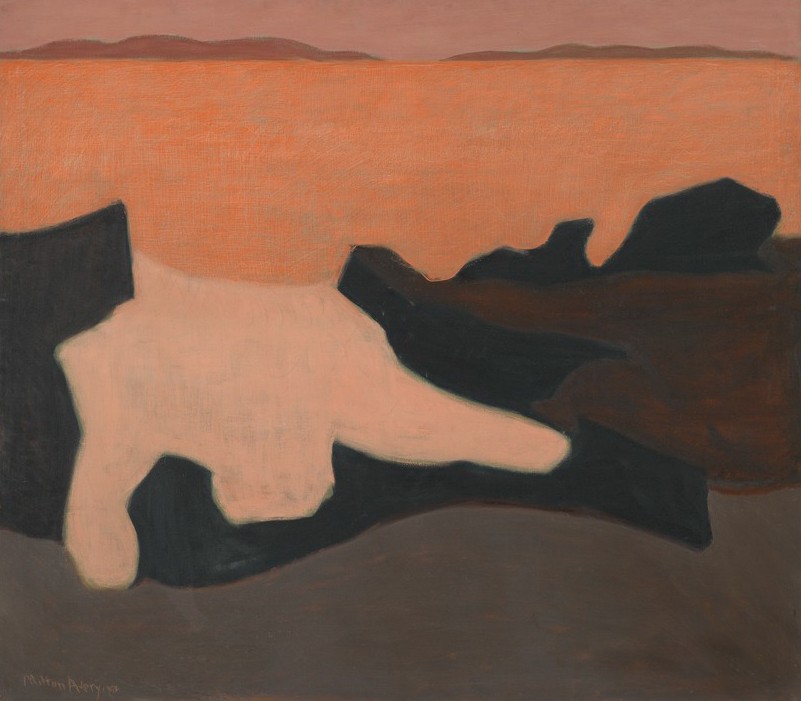
In those days, Rothko and Gottlieb would study Avery’s paintings and, according to Sally Avery, “take them apart.” On Cape Ann, they watched him treat the beach as a backdrop against which he placed monumental, thick-hipped figures, arranging areas of pattern (umbrellas, beachwear) against flat, colored shapes in compositions with shifting horizon lines. Following Avery’s example, they experimented with gouache and watercolor applied to colored construction paper.
The Averys and Gottliebs returned in the summer of 1933, and were joined by the Rothkos in 1934. The Depression was biting hard, but the artists’ life in Gloucester remained simple and uncorrupted. “We saw each other day in and day out,” Sally recalled of those years. “Evenings we’d gather to have a cup of tea and look at our day’s work. There was no talk of selling—only of painting.”
“I always thought Avery was a great artist,” Gottlieb would later say. “I always regarded him as a brilliant colorist and draftsman, a solitary figure working against the stream.” Gottlieb was right. Avery was one of the 20th century’s most original colorists. His expansive compositions were influenced by Pierre Bonnard and Matisse as well as by American folk art. Unlike Matisse, who loved bold, blatant colors, he favored unusual, in-between hues—mauves, browns, pale greens—all close in tonal value. He would often unify three or four slightly clashing varieties of the same color with a complementary hue elsewhere in the arrangement. Like spacious minor-key chords given a subtle major-key lift, these color combinations can arouse powerful emotions that are excruciatingly just short of fulfillment.
When it came to being influenced by others, Matisse understood what was at stake. But, he said, “I have never avoided the influence of others. I would have considered it cowardice and a lack of sincerity toward myself.”
To be open to influence is to risk being dislodged from your former self. It requires you to have the confidence to convert the ensuing upheaval to your own (still unknown) purposes. The process is complicated and rarely goes smoothly. Often, though not always, it involves some kind of betrayal.
No one betrays anyone in this story. All three artists remained friends. But the two younger painters, Rothko and Gottlieb, although deeply affected by Avery’s original way of painting, eventually decided that they needed to go further—to change not just the colors, the shapes, or the subjects, but something more fundamental.
In 1943, they broke away. Perhaps coincidentally, perhaps not, the breach happened just as Avery was beginning to thrive. He had been choosing larger canvases and distilling his paintings down to a few essential ingredients. The strategy was working. His work was selling. Dealers were fighting to represent him. He had a series of successful shows. The reviews were good.
Rothko, meanwhile, experienced a creative crisis and, in 1940, stopped painting for a year. He had been digging into philosophy, reading Schopenhauer, Nietzsche, and Kierkegaard, as well as the Greek myths and tragedies. Gottlieb, at the same time, made works merging surrealism with imagery inspired by masks and ritual objects from Africa, the Pacific, and Native North American cultures.
As the two younger men moved steadily closer to total abstraction, a tension that has in many ways defined American art—between the concreteness of the material world and the amorphousness of the sublime—was coming to a head. Avery, ever loyal to his sketchbook, remained committed to direct observation of particular people and places. His summer companions were about to throw in their lot with the sublime.
The push toward abstraction in mid-century American art coincided with a surge of interest in existentialism, which had begun to displace the pragmatism that underlay Avery’s approach. A sense that even the closest ties might be loosened by what T. S. Eliot—who had himself summered for nearly two decades in Gloucester—had described (in a review of James Joyce’s Ulysses) as an “immense panorama of futility and anarchy” was lent gravity by the world wars. But the human predicament, as Albert Camus made clear in The Stranger (1942), went beyond man-made conflict. It was inextricable from all that was inhuman, arbitrary, and immense—from the blinding energy of the sun on an Algerian beach, for instance.
On Cape Ann, Rothko and Gottlieb thought a lot about the sun, as well as the sea, the sky, and the smallness of human life. They were no doubt aware of the death-haunted history of Gloucester, where, between 1866 and 1890, more than 2,450 Gloucester men and 380 schooners failed to return from the fishing grounds. They wanted their art to communicate awe, and a sense of the insecurity and brutality of existence. It was as if the Atlantic were pulling them out to sea, away from both the harbor intimacy of Gloucester and the embrace of Milton and Sally Avery.
In 1943, Rothko and Gottlieb co-authored a letter and sent it to The New York Times, which published it on June 13. The letter responded to the Times critic Edward Alden Jewell, who, in a review, had misjudged (they felt) paintings by Rothko and Gottlieb. It also doubled as a five-point manifesto: “To us,” they wrote, “art is an adventure into an unknown world, which can be explored only by those willing to take risks.” That was the first point. The fourth point ended: “We are for flat forms because they destroy illusion and reveal truth.” According to the fifth point, “only that subject matter is valid which is tragic and timeless.” A concluding salvo declared that for their work to succeed, “it must insult anyone who is spiritually attuned to interior decoration; pictures of the home; pictures for over the mantle; pictures of the American scene”—the list continues—“prize-winning potboilers; the National Academy; the Whitney Academy,” and so on.
Avery could easily have felt personally targeted. He had exhibited, after all, at the first and second Whitney Biennials (in 1933 and 1936); he painted domestic interiors and American landscapes; and his pictures could be called “decorative” (at least in the sense Matisse meant when he described his more ambitious paintings as “decorations”).
He was probably too magnanimous—or phlegmatic—to take umbrage, and the summer proceeded pleasantly enough. If the group dynamic had become awkward, it correlated, the art historian Robert Hobbs wrote in his monograph of Avery, “with the way rebellions between initiates and their mentors are frequently enacted: certain brash rejections are cushioned with compliments, and personal assurances attempt to heal the break that has in actual fact been made.”
Which it had. Mentor and protégés went separate ways. They wouldn’t summer together again until 1957, when they reconvened in Provincetown on Cape Cod.
Sometimes after a clear-cut break, a reciprocity gradually reemerges. Even as the abstract expressionists transformed American art, Avery wasn’t entirely left behind. The period’s most influential critic, Clement Greenberg, cast Avery as a sort of John the Baptist to the artists whom Greenberg had tried to deify. The new crop of abstract painters, he wrote in 1957, “has certain salutary lessons to learn” from Avery “that they cannot learn from any other artist on the scene.”
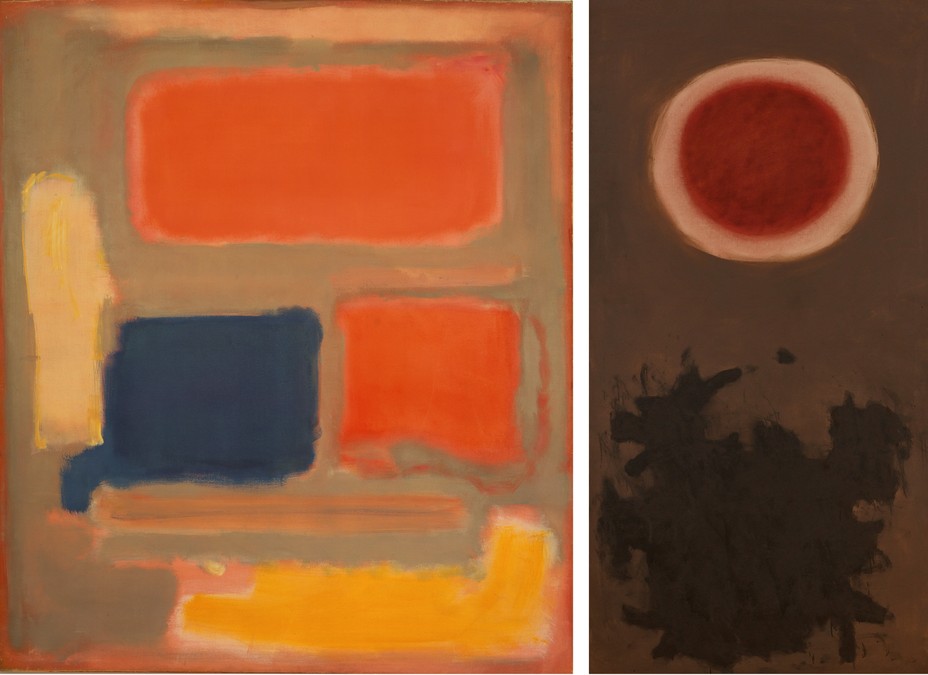
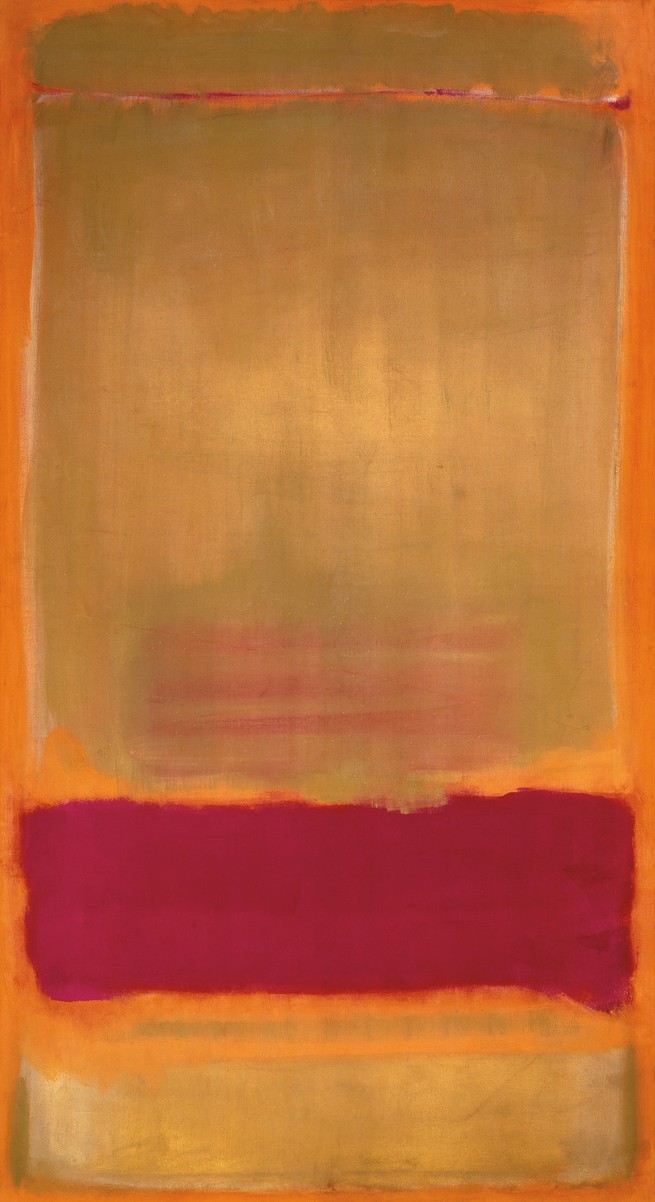
In World War II’s immediate aftermath, Rothko painted abstract, colored shapes, beginning with what he called “multiforms” and shifting, around 1949, to his signature format of floating “lozenges” of soft-edged colors. He liked to layer warm and cool colors, so that in one lozenge a cooler purple might subdue a thin overlay of red while in its neighbor, a warm yellow rises like steam through the same red. The effect can be akin to music, and so intensely affecting that you’re almost willing to accept the artist’s preposterous rhetoric about his work. (“I would like to say to those who think of my pictures as serene,” Rothko once wrote, “that I have imprisoned the most utter violence in every inch of their surface.”)
Meanwhile, Avery, working now on larger canvases, let particulars of the observed world dissolve into trembling fields of color. The paintings remained recognizable depictions of sea, land, and sky, but they, too, had as their true subject something closer to music. A gallery in the Cape Ann Museum exhibit (which will travel to the Phillips Collection, in Washington, D.C., in October) allows these late Avery paintings to share space with a sequence of mature Rothkos and similarly spare Gottliebs. The sense the gallery creates is of all three artists tenderly reunited and singing together in unison.
If Rothko’s abstract paintings recall the ethereal, spatially ambiguous atmosphere of Caspar David Friedrich’s Monk by the Sea (painted between 1808 and 1810) or certain late works by J. M. W. Turner, they may also evoke the natural environment he observed on Cape Ann. His compositions are oriented vertically, but the lozenges nestled within each painting tend to be horizontal, so it’s tempting to see the thin strips dividing them as swaths of land hovering between sea and sky. Gottlieb, too, favored shapes that suggested the sun and moon—phenomena that he, a passionate sailor, had daily observed while out on the water.
Despite all of this concordance, I came away sensing something unresolved about the relationship among these three powerful artists. The late Averys are good, but they’re simply not as strong as the best Rothkos, which hum with colors so richly resonant that they make Avery’s attempts to work on a larger scale look anemic. The Averys also lack the deep, metaphysical suggestiveness of the Gottliebs.
Yet when you set aside the late works and consider Avery’s oeuvre, it seems to me that he was the better—more richly poetic, more generative—artist. The problem with the abstract expressionists’ relentless courting of the sublime was that the process of distillation produced too much bombast. And it led them into a cul-de-sac. As a skeptical character in John Updike’s novel Seek My Face put it, referring to the postwar generation of abstract expressionists, “they all still spoke of painting in terms of self-exploration and an agonized authenticity that would revolutionize the world and whatnot, but the results were a little like company logos, everybody working on the scale of 19th-century academic art but each of them having come up with some eye-catching simplification.”
After Rothko settled on his signature manner, the level of repetition in his work became oppressive. Gottlieb, too, as he chased the sublime, seemed to shun the finer tendrils of the sensuous world, with results that felt fatally monotonous.
To Greenberg, Avery was a prophet, his work a precursor to his younger peers’ more radical experiments. But maybe Avery was actually better than that. Rejecting Greenberg doesn’t mean claiming that abstraction was some kind of aesthetic mistake. But I would argue that, whereas Avery’s paintings continued to be aerated by the beautiful unruliness of the material world, Rothko and Gottlieb, especially later on, were relatively formulaic.
True, if forced to choose, I might prefer to look at my favorite single Rothko over my favorite single Avery. But I would rather spend time with a dozen of Avery’s finest works than a dozen of Rothko’s. That’s because Avery understood that a deep canyon separates things in the world from their representations in art. The mystery of painting lies in what takes place in that shadowy, fertile zone, where what you thought was green foliage turns into the strangest dark purple, that body of gray water has flushed vivid turquoise, the blue sky is now flaming orange, and you don’t even know whether these transformations have taken place in life or on the canvas.
Avery proved that figurative artists, in trying to represent the observable world, can be as free in their choices as any abstract painter. But their work is less likely to become clichéd, because any stale fixations will always be rinsed and refreshed by the real.
The Cape Ann Museum added its first Mark Rothko painting to the permanent collection on Thursday, thanks to a gift from the artist’s son.
“We’re just absolutely thrilled to be able to add this first work by Mark Rothko into the museum’s collection, as it’s really going to help audiences understand the profound role that Cape Ann played in Rothko’s artistic evolution,” said Oliver Barker, the museum’s director.
The 1934 watercolor and gouache landscape, titled “Untitled (wharf, Gloucester, Massachusetts),” is one of a series of abstract landscapes Rothko painted of the area. It depicts Gloucester Harbor looking from East Gloucester, with fishing piers and the town’s waterfront buildings.
Barker said this painting was made when Gloucester was America’s largest fishing port, and that the drying racks used to preserve fish are represented in the piece.
“In the foreground, you can actually see the fish flakes that are on the pier that juts out onto Gloucester Harbor,” he said.
The painting is currently part of the exhibition “Avery, Gottlieb & Rothko: By the Sea.” The exhibit is made up of 79 pieces of art and tells the story of the relationship between Rothko, Adolph Gottlieb and Milton Avery, three New York artists who spent summers on Cape Ann together.
“My gift reflects my genuine love for this remarkable town and, I am certain, echoes my father’s feelings from his two extended stays — stays that sparked a vivid response from his brush,” Christopher Rothko, the artist’s son, said in a press release announcing the donation. “Now this watercolor is back home where it will be treasured and where it may evoke an extra smile of recognition.”
“Avery, Gottlieb & Rothko: By the Sea” is on view through Sept. 27.
/wp-content/uploads/2023/08/logo.png00Haley Wolfe/wp-content/uploads/2023/08/logo.pngHaley Wolfe2026-09-01 10:35:342026-09-01 10:35:34WBUR: Cape Ann Museum gifted Rothko painting that depicts Gloucester
Mark Rothko’s “Untitled (wharf, Gloucester, Massachusetts),” a watercolor and gouache on construction paper painted in 1934, has been gifted to the Cape Ann Museum by Rothko’s son Christopher Rothko.
A gift of unimaginable proportion — a Mark Rothko painting of a Gloucester wharf — has been made to Cape Ann Museum by the artist’s son, from his personal collection.
Rothko is among the most influential abstract artists of the 20th century.
Christopher Rothko donated his father’s 1934 watercolor and gouache painting “Untitled (wharf, Gloucester, Massachusetts)” to the museum. It is the first Rothko artwork to enter the museum’s permanent collection.
This artwork is a signature piece in the Cape Ann Museum’s current special exhibition, “Avery, Gottlieb & Rothko: By the Sea,” which shares the untold story of the long friendship among Mark Rothko, Adolph Gottlieb and Milton Avery, three New York City artists. Their shared summers in Gloucester, the nation’s oldest seaport, would have a lasting influence on this trio of artists.
“My father said that all art was inherently of its time. But sometimes, even with a master of abstraction like Mark Rothko, art can also be inherently of its place,” Christopher Rothko said. “The richly-hued watercolor of Gloucester Harbor that I am gifting to the Cape Ann Museum is such a piece, capturing details from nearly 100 years ago that can still be seen today.”
“My gift reflects my genuine love for this remarkable town and, I am certain, echoes my father’s feelings from his two extended stays — stays that sparked a vivid response from his brush,” he said. “Now this watercolor is back home where it will be treasured and where it may evoke an extra smile of recognition.”
Rothko’s artworks capture prices ranging from millions to many tens of millions of dollars at auction.
“We are beyond ecstatic that the import of Rothko’s formative Cape Ann connections will now remain a visible presence in the galleries for all time,” museum Director Oliver Barker said. “It is an extraordinary honor to have Christopher Rothko give this remarkable painting to the museum.”
Next month, Christopher Rothko and his sister, Kate Rothko Prizel, will participate in Cape Ann Museum’s Sept. 17-18 symposium, when they will discuss their father’s development as an artist. They both contributed insightful essays to the special exhibition’s 224-page catalogue. Rothko, who holds a doctorate in clinical psychology, and Prizel, a retired physician, oversee the management of their father’s legacy.
The gift painting depicts a scene from Gloucester’s Inner Harbor, including the once common fish flakes on a pier jutting out into the water.
“This exhibition has revealed an important chapter in Mark Rothko’s artistic development, tracing the evolution of his style during his formative years in Gloucester, where he painted alongside his mentor, Milton Avery, and his friend, Adolph Gottlieb,” Barker said. “Harbor and beach scenes were central to Rothko’s experience of Cape Ann and to his emerging artistic vision. We are deeply grateful for this gift and thrilled that Rothko’s first work to enter the museum’s collection will help audiences understand the profound role Cape Ann played in his artistic evolution.”
The special exhibition “Avery, Gottlieb & Rothko: By the Sea” is guest-curated by Eliza Rathbone, chief curator emerita at The Phillips Collection in Washington, D.C., a scholar with extensive expertise on the trio of artists. Rathbone’s close connection to the families of these artists enabled her to uncover new insights into their summers on Cape Ann.
Following its Gloucester debut through Sept. 27, the exhibition will travel to The Phillips Collection in Washington, D.C., marking the first time an exhibition organized by the Cape Ann Museum will tour to a national museum.
Cape Ann Museum, in a statement, said has been the recipient of an extraordinary number of gifts of art in recent years, while acquiring important new works through purchase, as it continues to expand and strengthen its holdings. These works include paintings, sculptures, drawings, decorative arts and archival materials.
In 2023, Janet and William “Wilber” Ellery James gifted 300 works of Cape Ann American art to the museum, helping to build momentum for a remarkable period of collecting and philanthropy, Barker said.
“The donation of this Rothko painting is a particularly significant addition to these growing holdings, bringing an important work by one of the 20th century’s most influential artists into the collection and further enriching the breadth and depth of the museum’s recent acquisitions,” Barker said.
/wp-content/uploads/2023/08/logo.png00Haley Wolfe/wp-content/uploads/2023/08/logo.pngHaley Wolfe2026-09-01 10:31:492026-09-01 10:31:49Gloucester Daily Times: Son gifts Rothko work of Gloucester Harbor to museum




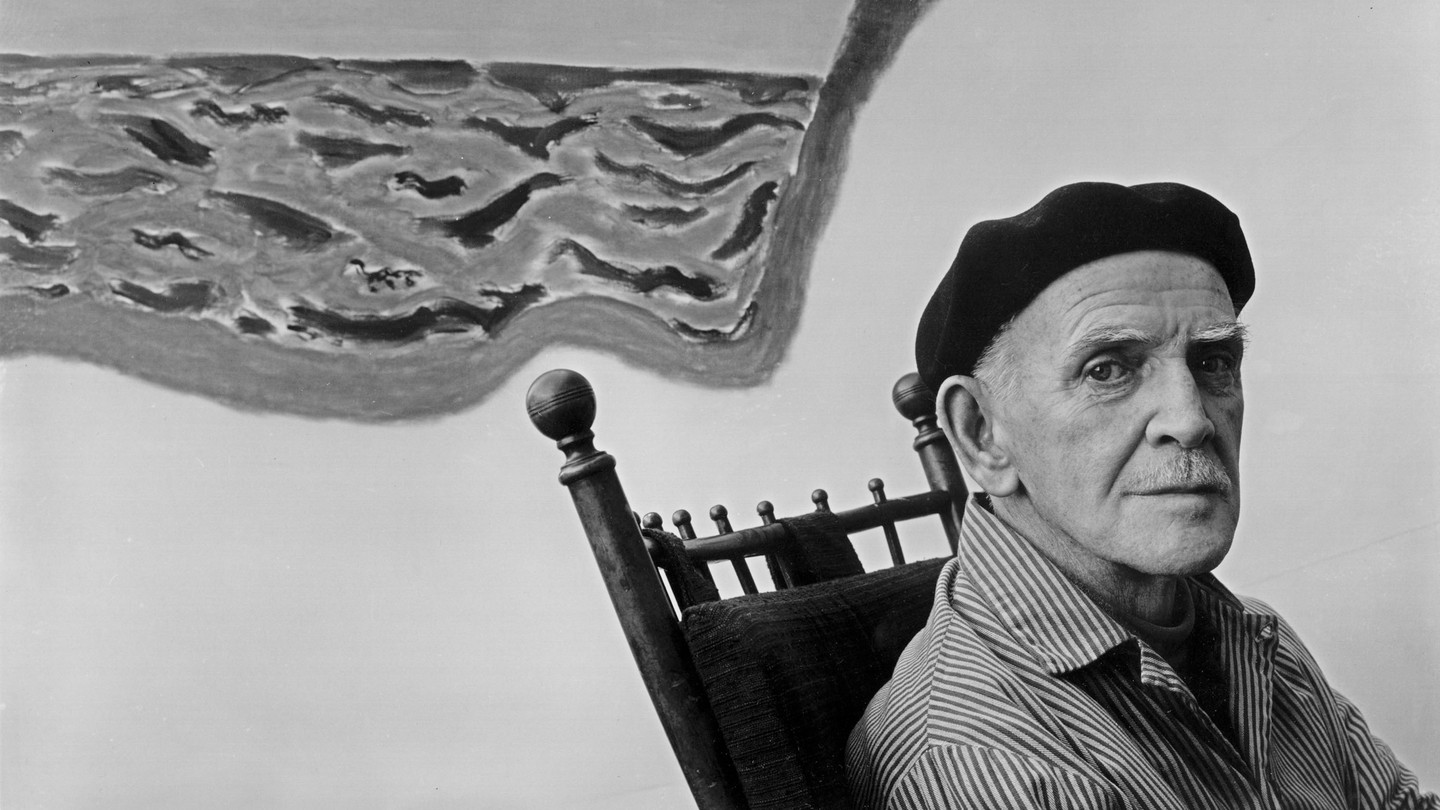 The painter Milton Avery (Arnold Newman Properties / Getty)